



20 Jan 6 Major Contributors to Kitchen Renovation Costs
As the heart of the home, it’s no surprise that kitchens are one of the most popular spaces to renovate. From cooking and entertaining to everyday family life, a well-designed kitchen can make a big impact. At the same time, kitchen renovations are known for how quickly costs can add up.
Between materials, labor, and design choices, expenses can rise faster than many homeowners expect. The good news is that understanding the biggest contributors to kitchen renovation costs can help you plan more confidently. If you want a full remodel or are aiming for a budget kitchen renovation, knowing where your money typically goes makes it easier to prioritize and stay on track
1. Overall Scope and Layout Changes
The size of your kitchen and the overall scope of the project play a major role in determining kitchen renovation costs. Larger kitchens typically require more materials and labor, while more extensive renovations often involve higher expenses across the board.
Layout changes—such as removing walls, moving appliances, or relocating plumbing and gas lines—can quickly increase costs due to the added labor and structural work involved.
If you are aiming for a budget kitchen renovation, keeping the existing layout is one of the most effective ways to control expenses. Thoughtful planning early in the process helps avoid last-minute changes, which are often the biggest contributors to unexpected cost increases.
2. Cabinetry
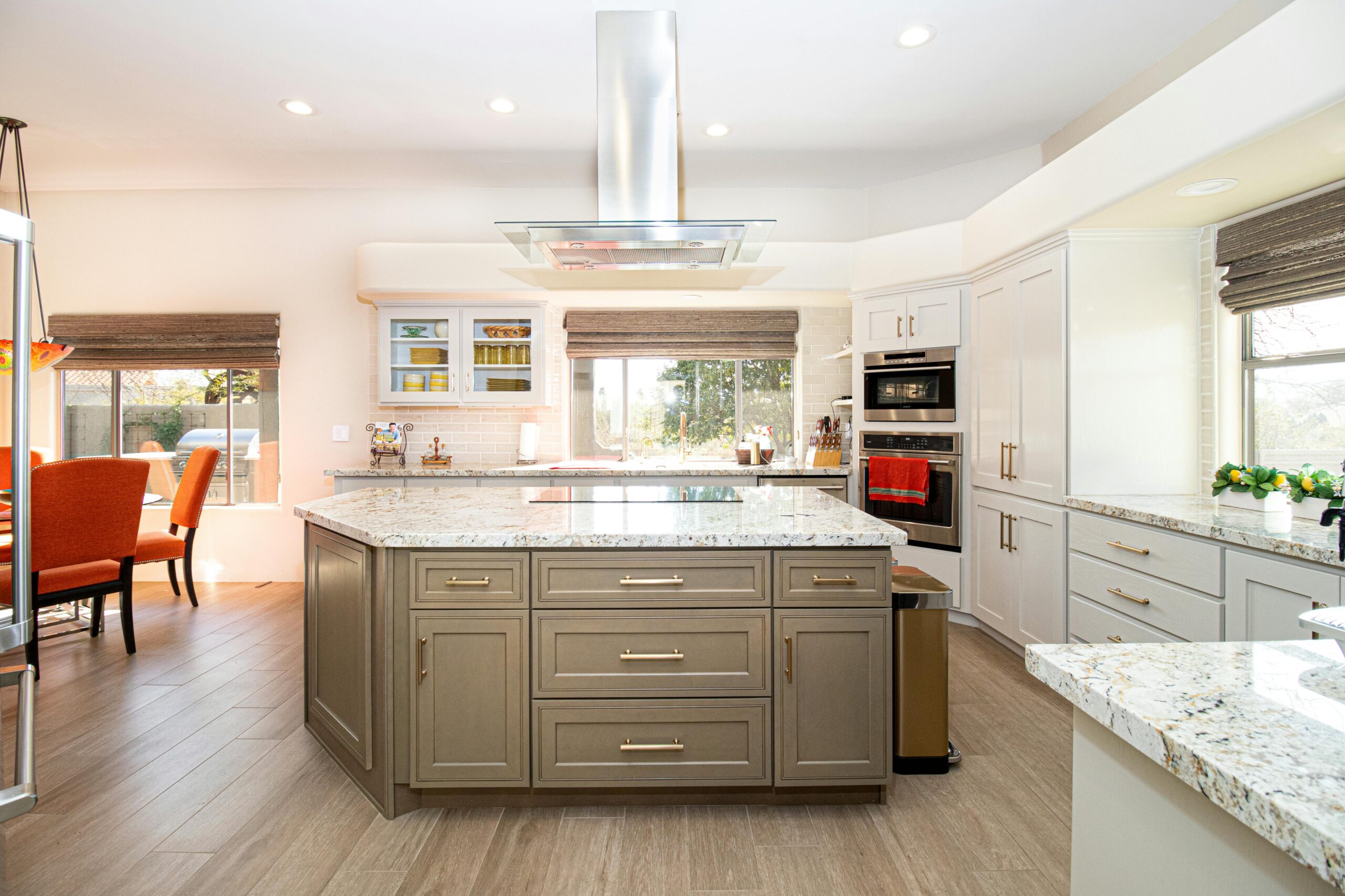
Cabinetry is often one of the largest contributors to overall kitchen renovation costs, and for good reason. Cabinets take up significant visual and physical space in the kitchen, and they’re used every single day. The type of cabinetry you choose can have a major impact on your budget.
Stock cabinets are typically the most affordable option, while semi-custom cabinets offer more flexibility in sizing and finishes at a higher price point. Custom cabinets provide the most personalization but also come with the highest cost.
Materials, finishes, and hardware selections also influence pricing. Solid wood, specialty finishes, soft-close drawers, and upgraded handles can all add up.
For a budget kitchen renovation, cabinet refacing, repainting, or updating hardware can deliver a fresh, modern look without the expense of a full cabinet replacement—proving that style doesn’t have to come with a hefty price tag.
3. Countertops and Surfaces
Countertops are another major factor in kitchen renovation costs, as material choices can vary widely in both price and performance. Popular options include laminate, quartz, granite, butcher block, and solid surface materials—each offering different benefits.
Laminate is typically the most budget-friendly, while quartz and granite are higher-end options known for their durability and polished appearance. Butcher block provides warmth and character, while solid surface countertops strike a balance between affordability and seamless design.
When choosing a countertop, durability, maintenance requirements, and style all influence pricing. Higher-end materials tend to cost more upfront but may offer longer-lasting value.
For a budget kitchen renovation, selecting a cost-effective material with strong visual appeal can help achieve a stylish finish without overspending.
4. Appliances and Fixtures
Appliances can significantly influence overall kitchen renovation costs, especially when multiple items are being replaced at once. Ranges, refrigerators, dishwashers, and microwaves vary widely in price depending on brand, size, and features.
Standard appliances are typically the most affordable, while energy-efficient models may cost more upfront but can offer long-term savings on utility bills. Professional-grade appliances often sit at the highest price point and are best suited for homeowners with specific cooking needs.
Fixtures also add to the budget. Sinks, faucets, and specialty features like pot fillers or touchless faucets can elevate functionality and style but may increase costs.
For a budget kitchen renovation, prioritizing must-have appliance upgrades over luxury features helps keep spending focused and manageable.
5. Flooring and Backsplash Choices
Flooring and backsplash selections play an important role in shaping both the look and kitchen renovation costs of your space.
Flooring options like tile and hardwood tend to be more expensive due to material and installation costs, while laminate and luxury vinyl offer durable, budget-friendly alternatives that still deliver style. Each option varies in maintenance needs, lifespan, and overall appearance, which can affect pricing.
Backsplashes also range widely in cost. Tile remains a popular choice, while slab stone creates a high-end look at a higher price point.
For a budget kitchen renovation, mixing statement features—such as a bold backsplash behind the range—with more affordable materials elsewhere can help control costs while still making a visual impact.
6. Labor, Permits, and Professional Services
Labor is one of the largest—and most important—contributors to overall kitchen renovation costs. A successful remodel often requires multiple skilled trades, including carpenters, electricians, plumbers, and tile installers.
Each professional plays a key role in ensuring the work is done safely, correctly, and to code. While labor costs can feel significant, quality craftsmanship helps prevent future repairs and costly issues down the road.
In addition to labor, permits and inspections may be required for electrical, plumbing, or structural changes. These steps are essential for code compliance and long-term safety.
Even for a budget kitchen renovation, professional planning and coordination can help avoid mistakes, delays, and unexpected expenses that ultimately save you time, money, and stress.
How to Keep Kitchen Renovation Costs Under Control
Keeping kitchen renovation costs manageable starts with smart planning. Setting priorities early helps you focus your budget on the features that matter most, whether that’s updated cabinetry, new appliances, or improved functionality.
Getting multiple estimates allows you to compare options and better understand where your money is going. It’s also wise to plan for contingencies by setting aside a small buffer for unexpected expenses.
Choosing value-driven materials can deliver durability and style without unnecessary upgrades. Just as important is clear communication with your renovation team. Be sure to ask questions and stay aligned throughout the process.
With thoughtful decisions and a solid plan, you can achieve a beautiful kitchen at nearly any budget level.
Final Thoughts
Kitchen renovation costs can add up quickly, from layout changes and cabinetry to appliances, finishes, and labor. Understanding where your money is typically spent allows you to make informed decisions and plan with confidence.
By balancing design goals with practical budgeting, you can prioritize what matters most and avoid unnecessary expenses. With thoughtful planning, clear communication, and the right professional support, even a budget kitchen renovation can deliver standout style, improved functionality, and a space you’ll enjoy for years to come.
Ready to Start Your Remodel? Let’s Talk!
At Timber & Stone Renovations, we’ve helped countless homeowners in Winston-Salem, NC, bring their visions to life—on time and on budget.
We believe in a transparent process and personalized guidance every step of the way. Whatever your basement remodeling dreams are, our team is here to help.
Contact us today or call (336) 778-0588 to schedule a consultation.
Sorry, the comment form is closed at this time.